Opener Repair in Eagle
Garage Door Opener Repair for Eagle, NE Homes
Eagle homes built mostly since 1980 run chain and belt drive openers whose control boards struggle in severe Nebraska cold. We repair them, from Lincoln.
What Happens When You Call
-
1
Call or Request a Quote
Tell us what the door is doing and roughly how old the house is - that alone points us toward the likely part before a truck leaves.
-
2
On-Site Diagnosis
A tech checks the spring, cables, tracks, and opener in person and tells you plainly what is actually wrong.
-
3
Straight Price, No Surprises
You get a number before any work starts. It covers parts and labor, nothing added after the fact.
-
4
Fixed the Same Visit
Most repairs are done in one trip. If a part needs sourcing, we tell you that upfront instead of guessing.
Doing It Yourself
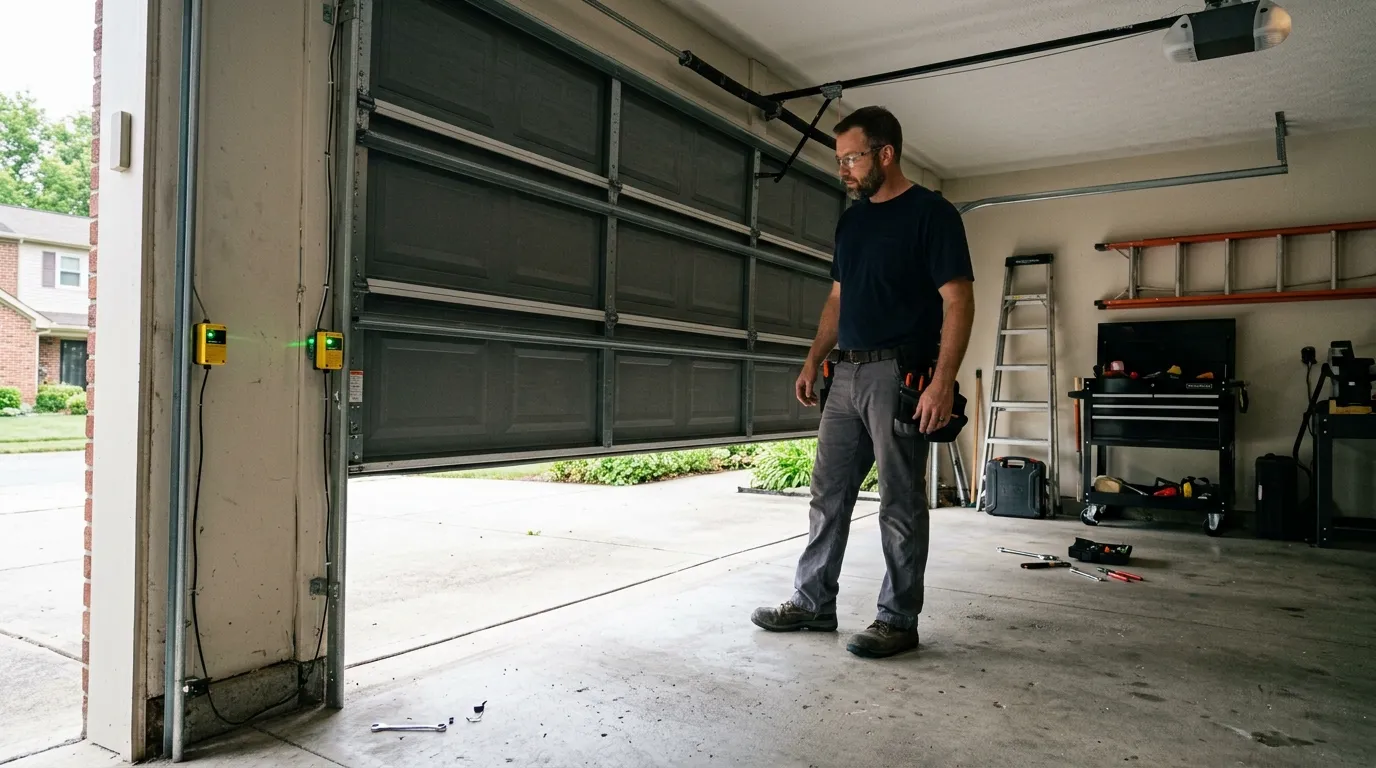
Before you call anyone, check the basics. Most Eagle houses went up around 1980, which puts a lot of openers in the chain-drive era with a keypad bolted to the wall and a set of travel-limit dials on the motor housing. If the door reverses before it hits the floor, or won't close at all, the limit switches or the safety sensors near the bottom of the tracks are the first thing to look at - wipe the sensor eyes, make sure nothing's knocked them out of alignment, and confirm the indicator lights are steady, not blinking.
A dead remote is often a battery, not a board. Swapping it costs nothing and rules out the cheapest possible cause.
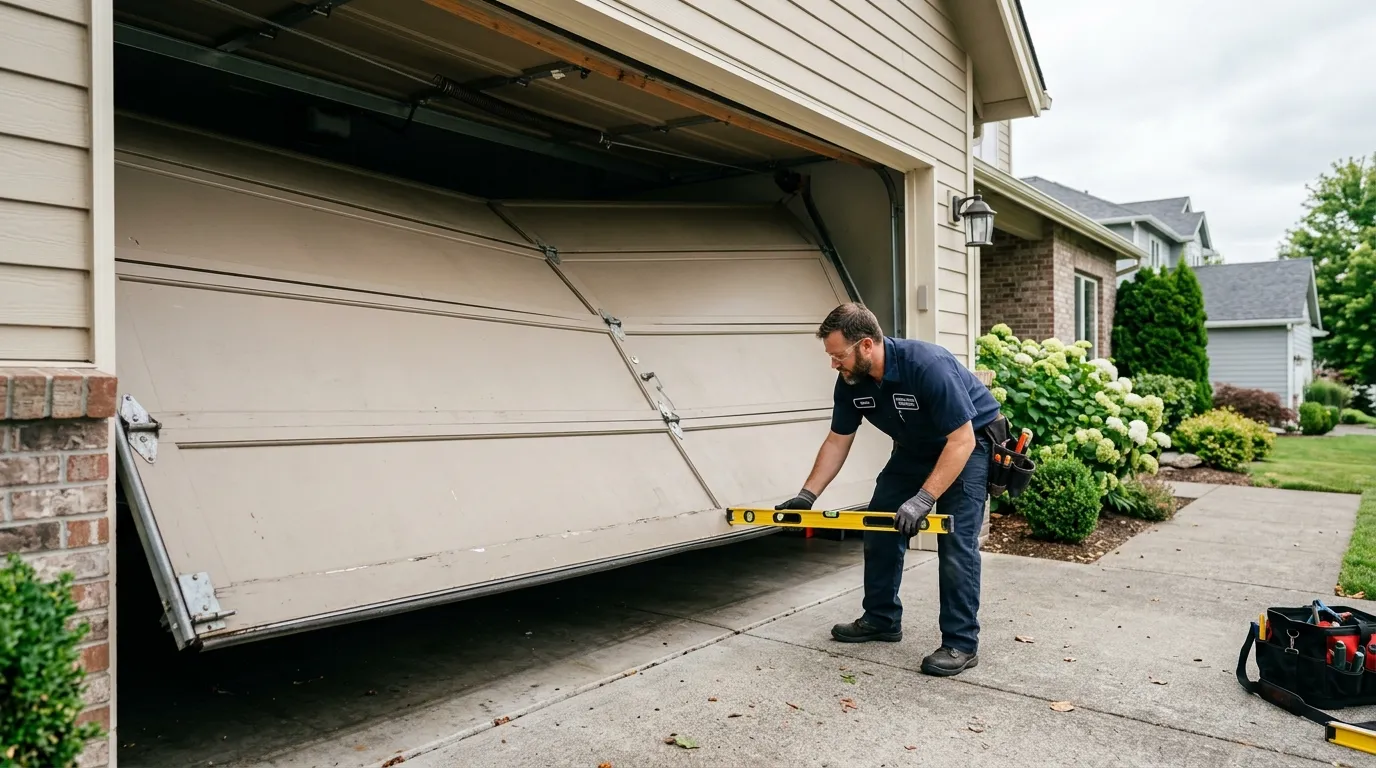
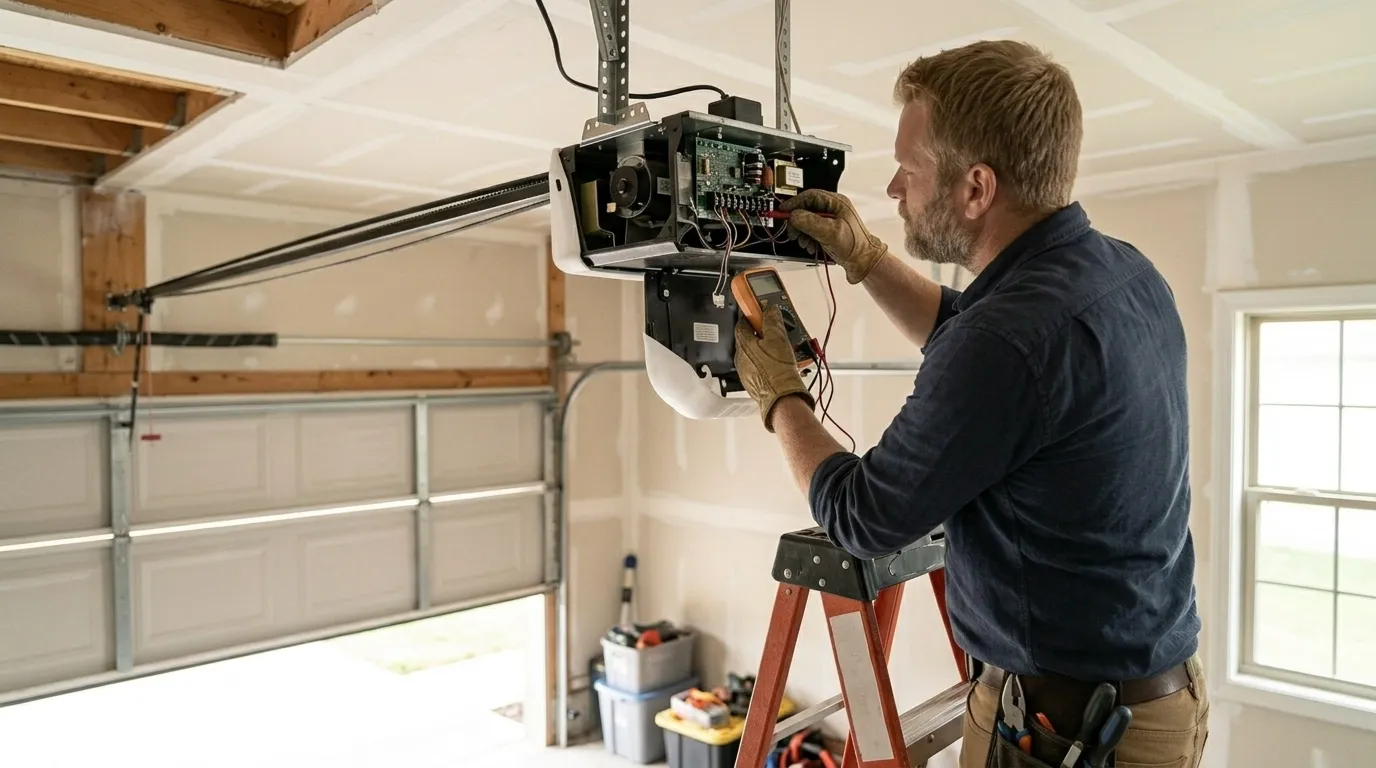
What we don't recommend you touch: the logic board itself, or anything involving the opener's internal gears while the door is under spring tension. Chain and belt drives from this era don't fail often, but when the board goes, it's a swap job that needs the right part number in hand, and guessing wrong means a second trip. If the door moves fine by hand but the opener won't engage, that's a job for a call, not a screwdriver.
The Cost of This Job
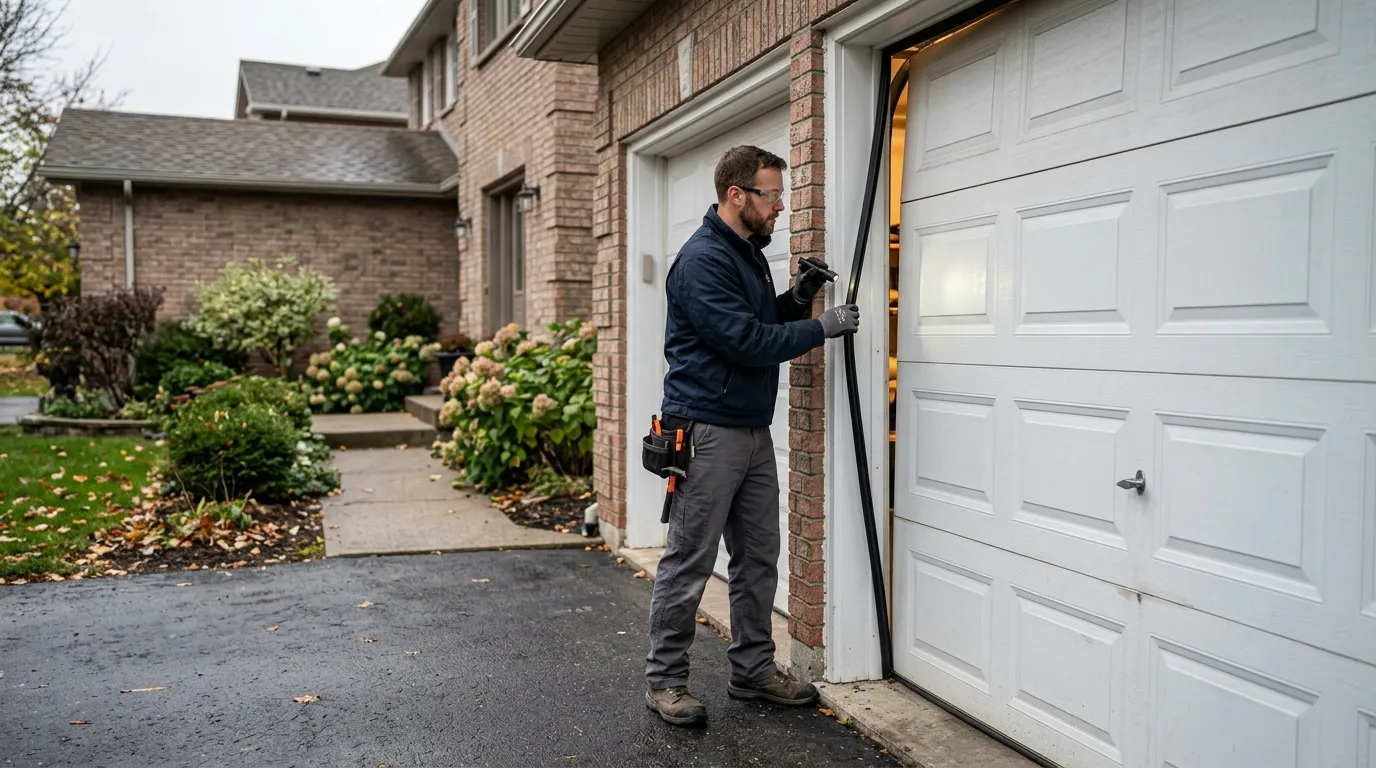
Eagle's median household income runs about $76,500 - roughly $6,300 under the $82,854 median across the rest of our service area. That gap is worth naming because it's exactly where the repair-or-replace decision gets made. A logic board swap, a new sensor pair, or a drive gear replacement keeps a working opener running without asking anyone to pay for a whole new unit, and at this income level that's usually the right call first.
Where it flips is age and wear. Most openers here match the housing stock - installed new around 1980 or replaced once since - and a unit already on its second motor, with a stripped gear and a tired capacitor, starts costing more to keep patching than to swap outright.
We won't quote a number sight unseen, because the actual part that failed changes the math more than anything else does. What we can tell you honestly is that we don't push replacement on an opener that just needs one part.
How Long You Are Without the Door
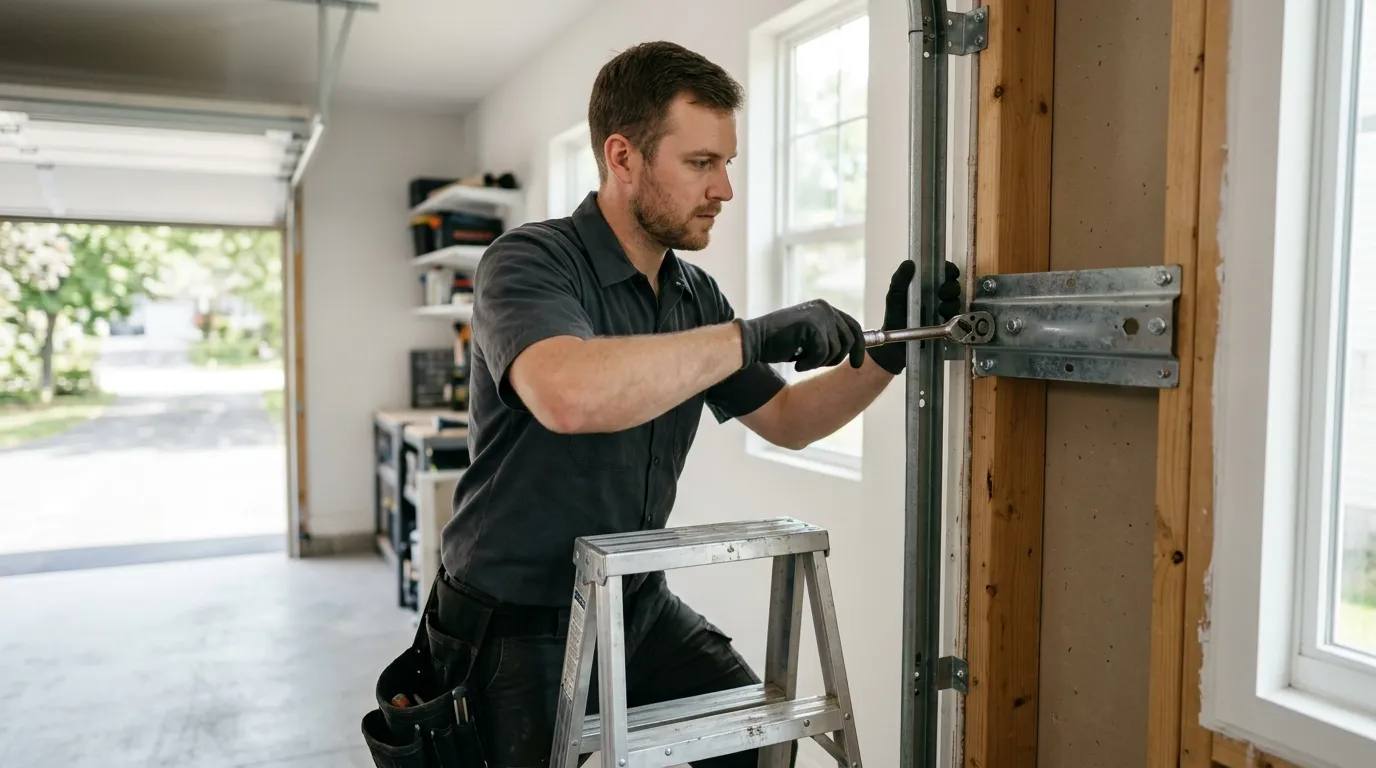
Eagle sits about 13 miles from Lincoln, and we don't keep a truck stationed out there. That means the technician who comes out has to know roughly what's wrong before leaving the shop, so the right logic board, sensor, or drive belt is already on the truck instead of being ordered after a look at the unit. A quick phone description of the symptom - grinding, no response, lights blinking a set number of times - saves a second trip more often than not.
With only 486 households in Eagle, this isn't a route we run every day the way we do inside Lincoln proper, so a visit gets scheduled rather than dropped in on. Once the technician is on site, most opener repairs - board swap, sensor realignment, gear replacement - are a same-visit job. What isn't same-visit: a part we don't stock on the truck for a less common model, which means a return trip once it's in hand.
Booking a Visit
Because the drive out is 13 miles each way, we ask for a callback number and a short description of what the opener is doing - or not doing - before we set a time. That's not a formality; it's how the right part ends up on the truck the first trip out.
If the opener trouble turns out to be tied to something on the door itself - a bent track, a bad roller - that's covered on our garage door service page for Eagle, not this one. And if you're comparing what a repair runs across the wider Lincoln area versus what's typical out here, our main opener repair page has that broader picture.
We don't do emergency same-hour runs to Eagle the way we might for a job five minutes from the shop - the distance is real and we'd rather tell you that up front than promise something we can't hold to.
The Symptom
The most common call from this area is a door that hums, or the motor turns over, but the door itself doesn't move - a chain-drive symptom that usually points to a stripped or slipped drive gear rather than the motor itself. Second most common: a remote that works from ten feet away in summer and stops working from the driveway once the cold sets in, which is a receiver or antenna problem more than a battery one.
A third pattern shows up on colder mornings specifically - the opener runs the full cycle but the lights blink a set number of times and the door won't complete the last few inches. That blink code is the board telling you which sensor or switch it thinks is out of range, and it's worth reading off before you call, because it tells the technician what to bring.
Less common but not rare: a keypad that stops accepting the code entirely. That's almost always the keypad's own battery or a wiring pinch at the wall unit, not the opener itself.
What Can Go Wrong
Openers installed around the time these houses were built - 1980 or close to it - are old enough now that the second or third failure on the same unit is common: a first motor swap years back, followed later by a logic board that finally gives out. Severe cold winters in this part of Nebraska are hard on both control boards and the capacitor that gives the motor its starting torque, and that strain doesn't care whether the opener is original or a replacement.
Belt-drive units, more common if the opener itself was swapped more recently than the house's 1980 build year, wear differently - the belt stretches and slips off its track guide rather than stripping a gear, which shows up as a door that moves in fits rather than stalling outright.
What we won't do is replace a board that's still under a working warranty from whoever installed it, or push a full opener swap when the actual fault is a forty-dollar sensor. If the unit is original to a 1980 build and this is its first real failure, that's usually a repair, not a replacement.
Why Eagle Calls Us
Other Garage Door Services in Eagle
Talk to a Eagle Technician First
Describe what the door is doing and get a straight answer on what it likely needs.
Recent Work in Eagle
A look at jobs our crew has been on nearby.
Frequently Asked Questions
Do you have a technician based in Eagle?
No. We work out of Lincoln and drive to Eagle for calls, about 13 miles each way. That means we ask for a description of the problem before scheduling, so the right part is already loaded when the technician leaves the shop, rather than found out on site.
Is it worth repairing an opener that's original to the house?
Often, yes. Most Eagle houses date to around 1980, and a chain-drive opener from that era that's still running usually just needs one part - a sensor, a gear, a board - not a full replacement. We look at what actually failed before recommending either.
Why does my opener act up more in winter?
Cold is hard on logic boards and on the capacitor that gives the motor its initial push, and this area sits in a severe cold climate band. A unit that runs fine in summer can hesitate or blink an error code on the coldest mornings even with no other problem.
Can I just replace the opener myself?
You can, and plenty of homeowners do for a straightforward chain-drive swap. Where we'd stop you is anything involving the door's spring tension or wiring into an existing keypad circuit you didn't install - that's where a wrong move gets expensive fast.
Need Opener Repair in Eagle?
Call now for straight answers on cost and timing.