Service
Garage Door Opener Repair Around Lincoln
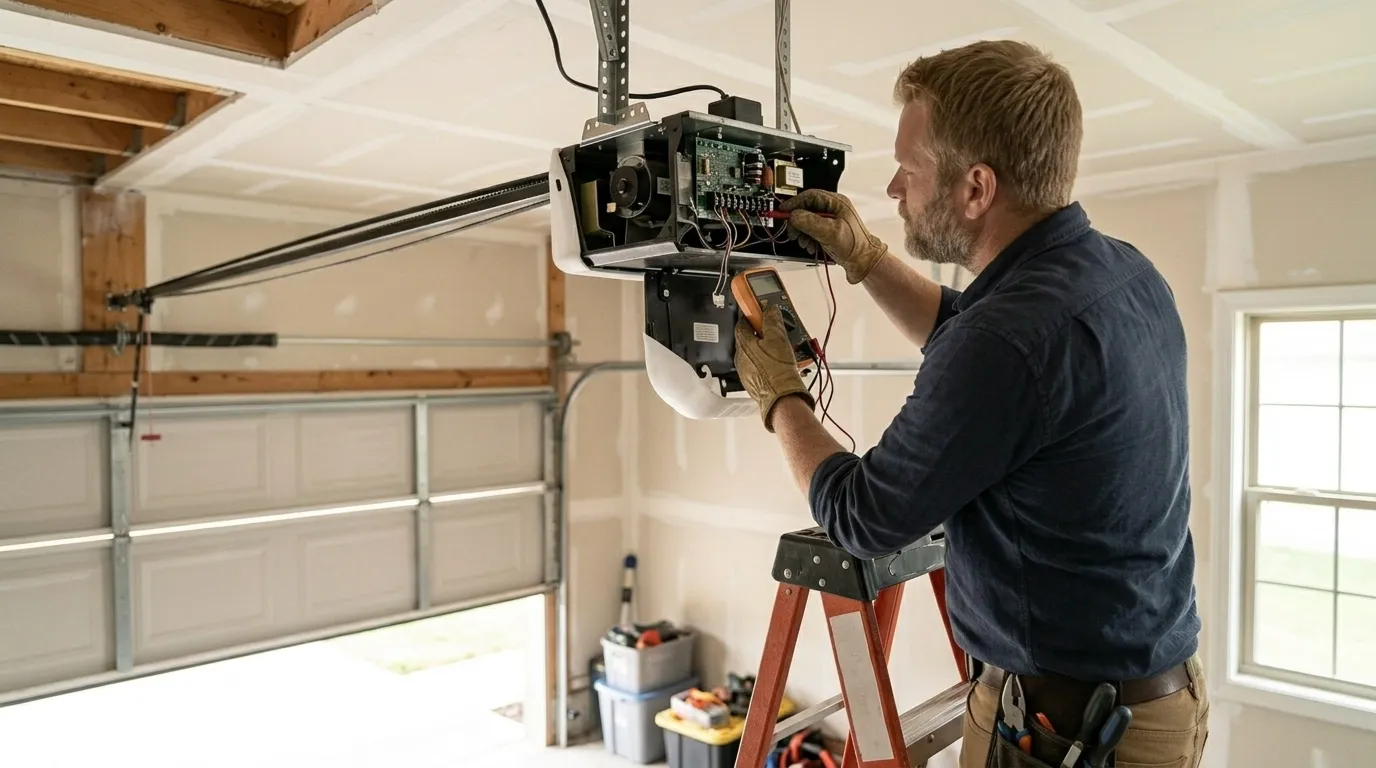
Opener repair for Lincoln homes built 1967-1995, where cold-weather gear wear and aging chain-drive units are the most common calls we get.
What Happens When You Call
-
1
Call or Request a Quote
Tell us what the door is doing and roughly how old the house is - that alone points us toward the likely part before a truck leaves.
-
2
On-Site Diagnosis
A tech checks the spring, cables, tracks, and opener in person and tells you plainly what is actually wrong.
-
3
Straight Price, No Surprises
You get a number before any work starts. It covers parts and labor, nothing added after the fact.
-
4
Fixed the Same Visit
Most repairs are done in one trip. If a part needs sourcing, we tell you that upfront instead of guessing.
What Causes It Around Here
Most of the houses we get called to sit in neighborhoods built between 1967 and 1995, with a lot of that stock going up around 1975. That matters for openers because the units installed in those decades were mostly chain-drive, with gear sets and circuit boards that were never built to run thirty or forty winters in a row. In a cold-severe climate like Lincoln's, the grease in an old drive gear stiffens up hard once temperatures drop, and a motor that has to fight that resistance every morning burns through its gear teeth faster than the same unit would in a mild climate.
We see it across the whole service area - Irvingdale, Belmont, University Place, West Lincoln, Highlands, Meadowlane, and out toward Waverly, Malcolm, Eagle, Ceresco, Crete, and Milford - because the housing pattern repeats: a mid-'70s build with the original or a first-replacement opener still on the ceiling. Add in a garage that isn't heated, and the capacitor that starts the motor takes a beating every cold snap. That combination - old gear, cold garage, decades of thermal cycling - is the single biggest reason we get opener calls in this area, more than any manufacturer defect or bad install.
A smaller share of calls come from newer belt-drive units where the logic board has just aged out, but that's the exception here, not the rule.
How Long You Are Without the Door
An opener failure doesn't always mean the door is stuck. Most of the time the door itself still moves fine by hand once you release the trolley, so you're not locked out of the garage - you're just doing it manually until the unit gets fixed. What actually stretches the timeline is parts.
If the failure is a common one - capacitor, logic board, a worn drive gear on a chain-drive unit from the '70s or '80s stock common around here - we usually carry what we need on the truck. If it's an older unit where the manufacturer has stopped making the specific gear kit or board, we have to source it, and that can add days rather than hours. That's the honest limitation: we don't stock a part for every opener made since 1967, and pretending otherwise would just mean a second trip.
In those cases we'll tell you straight whether waiting on the part makes sense or whether it's cheaper in the long run to swap the whole unit for something current.
The Cost of This Job
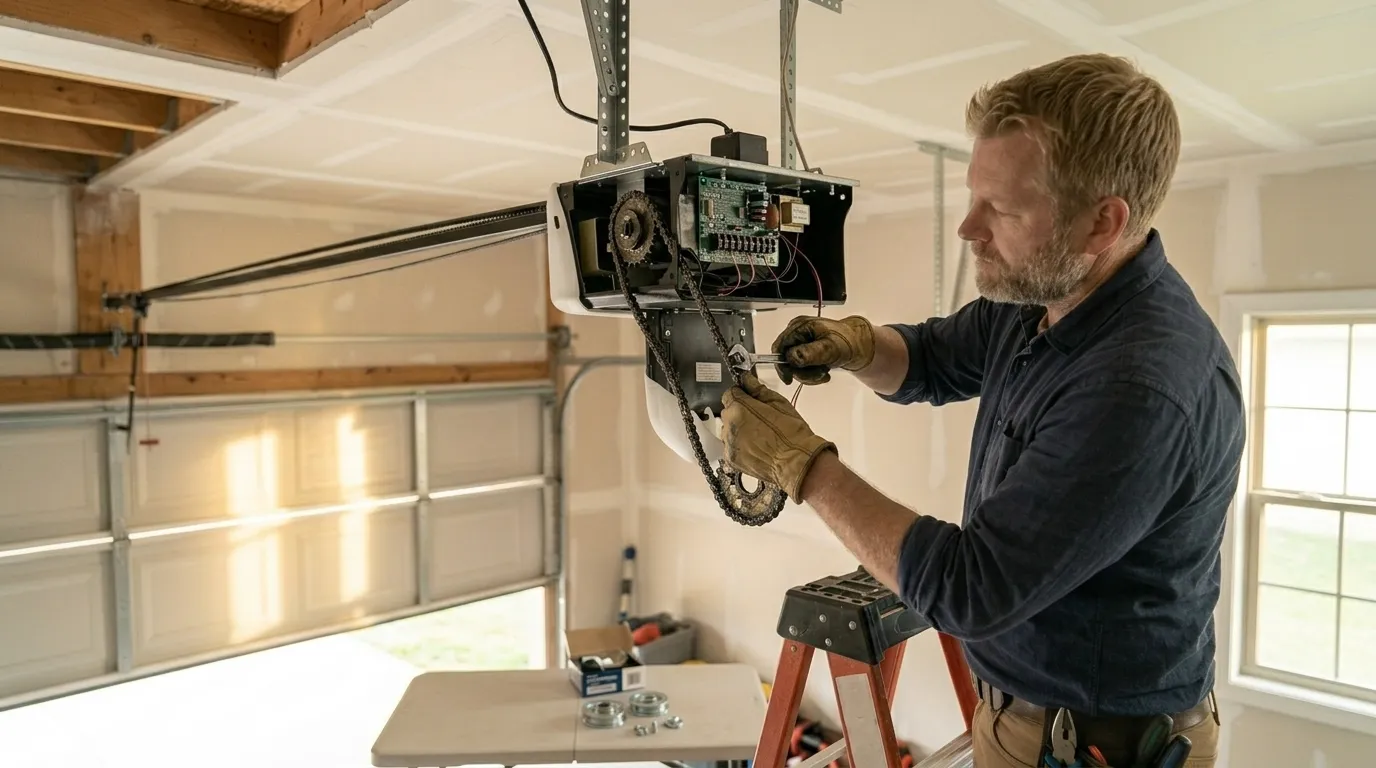
What drives the cost on an opener repair isn't the town, it's the unit and how far gone it is. A capacitor or a set of limit switches on an otherwise healthy motor is a small job. A stripped drive gear on a chain-drive opener that's been running since the house was built is a bigger one, and once you're replacing the gear, the sprocket, and the motor bearing together, you're closer to the cost of a new opener than a repair.
Given the age of the housing stock across this service area - a lot of it from the '70s through the early '90s - we run into that second scenario often enough that we always check the unit's age and condition before quoting a fix. There's no flat number that applies to every call, because a ten-year-old belt-drive opener and a forty-year-old chain-drive one aren't the same job. What we can promise is we won't sell you a repair on a motor that's not worth saving - sometimes the honest answer is that a new opener costs less over five years than keeping an old one limping along.
The Symptom
The calls we get fall into a short list. The opener hums but the door doesn't move - usually a stripped gear or a broken drive chain. The remote works from ten feet away but not from the driveway - often a logic board losing range as it ages, common in units from the older end of the local stock.
The door reverses right after it starts closing - a safety sensor issue, or a limit switch that's drifted out of adjustment over years of seasonal expansion and contraction in an unheated garage. Lights flash but nothing happens when you press the button - almost always the capacitor, especially after a stretch of hard cold, since that's the part most stressed by repeated cold starts. None of these point to the door itself; they point to the motor unit, which is why we ask what the opener is doing, not just what the door is doing, before we come out.
Why Lincoln Calls Us
Talk to a Technician Before You Book
Describe what the door is doing and get a straight answer on what it likely needs.
Jobs Like Yours
Recent work from this service line.
Frequently Asked Questions
Why does my opener only act up in cold weather?
The grease in an older gear set thickens when it's cold, which makes the motor work harder to move the same door. Over years of that extra strain, especially in an unheated garage, gears strip and capacitors wear out faster than they would in a milder climate. It's one of the most common opener complaints we see across this area's cold winters.
Is my opener too old to repair?
Depends on what's failed. A bad capacitor or logic board on an otherwise sound motor is usually worth fixing. A stripped gear set on a decades-old chain-drive unit often isn't, because by the time you replace the gear, sprocket, and bearing, you've spent close to the cost of a new opener anyway.
Can I still open my garage door if the opener dies?
In most cases, yes. Release the trolley on the rail and the door usually still lifts and closes by hand, since the opener and the door's spring system are separate. That buys you time to get it looked at instead of being stuck with the door open or shut.
Do you carry parts for older openers on the truck?
For common failures - capacitors, limit switches, standard gear kits - usually yes, since so much of the housing stock in this area dates to the same '70s-through-'90s window. For discontinued parts on older or unusual units, we sometimes have to order, and we'll tell you that up front rather than guess.
Need Garage Door Opener Repair Around Lincoln?
Call now for straight answers on cost and timing.