
Service
Garage Door Repair for Lincoln's 1960s-70s Housing Stock
Lincoln Garage Door Co repairs springs, openers, and tracks on the 1960s-70s doors common across Lincoln, NE, built for a climate that wears hardware fast.
What Happens When You Call
-
1
Call or Request a Quote
Tell us what the door is doing and roughly how old the house is - that alone points us toward the likely part before a truck leaves.
-
2
On-Site Diagnosis
A tech checks the spring, cables, tracks, and opener in person and tells you plainly what is actually wrong.
-
3
Straight Price, No Surprises
You get a number before any work starts. It covers parts and labor, nothing added after the fact.
-
4
Fixed the Same Visit
Most repairs are done in one trip. If a part needs sourcing, we tell you that upfront instead of guessing.
What Causes It Around Here
Most houses in Lincoln's service area went up between 1967 and 1995, with a median build year around 1975, so a lot of garage doors here are still running on the torsion or extension hardware that shipped with the house. That hardware wasn't built to run forever, and it definitely wasn't built for a cold, severe climate to keep cycling it through decade after decade of freeze-thaw.
Lincoln sits in a cold, severe climate band, and a steel torsion spring that's been cycling for four decades gets brittle fast once temperatures drop. Metal contracts in the cold, lubricant thickens, and a spring that had a little life left in October can snap on the first hard freeze. Same story with nylon rollers from that era - they crack instead of bending.
Across the six older pockets - including areas like Irvingdale, South Salt Creek, and Belmont - the 1960s and 70s stock shares the same aging opener chains and single-run tracks. If your neighbor's door failed last winter, yours is probably wired the same way.
It's not bad luck. It's the age of the parts meeting the weather they were never rated for.
How Long You Are Without the Door
How long you're stuck depends a lot on what's actually broken and how old the parts are. A snapped torsion spring on a standard setup is usually a same-visit fix - we carry common spring sizes on the truck. But original 1970s-era track brackets, older door panels, or opener parts that haven't been made in years sometimes mean tracking down a replacement instead of a shelf part, and that adds time.
Here's the honest limitation: if your door is a less common size or an older wood panel design from that build era, we may need to order a part rather than fix it on the spot. We won't pretend otherwise just to get the job booked. What we can tell you upfront, once we see the door, is whether you're looking at a same-day fix or a return trip.
A door that won't open at all is different from one that's just noisy or slow - the first is usually a spring, cable, or opener gear issue we can diagnose fast. The second can take a closer look at rollers, track alignment, and hinges before we know what's driving it.
The Cost of This Job
We're not going to throw a number out here that doesn't match what's actually on your door, because the range on this job is wide and mostly comes down to age and hardware. A torsion spring swap on a door from the newer end of Lincoln's housing stock is a straightforward job. A door built closer to that median 1975 date, on original hardware, often needs more than a spring - the drum, the cable, or the track bracket may have worn alongside it, and replacing one part without checking the rest just means another call in a year.
With 3,770 owner-occupied houses in the service area, a good share of them are past the age where original springs and openers hold up under normal use, let alone a Nebraska winter. That's the honest driver of cost on most calls we run: not the labor, but how much of the original 1967-1995 hardware is still in play and whether it's worth patching or worth replacing outright.
We'll give you the real number after we look at the door, not before, because guessing over the phone on a house this age usually guesses wrong.
The Symptom
The one we hear most from this side of town: door won't budge on a cold morning, or it starts up and stalls halfway. That's almost always a spring that's lost tension or seized from the cold, not the opener itself, even though the opener usually gets blamed first.
If your house is one of the roughly 5,990 households built in that 1967-1995 window, the parts on your door are older than the warranty on any opener sold today, and cold makes worn parts show their age faster than warm weather does. A door that's been dragging or sagging on one side for months tends to finally quit on the coldest day of the year - the metal has less give left to work with.
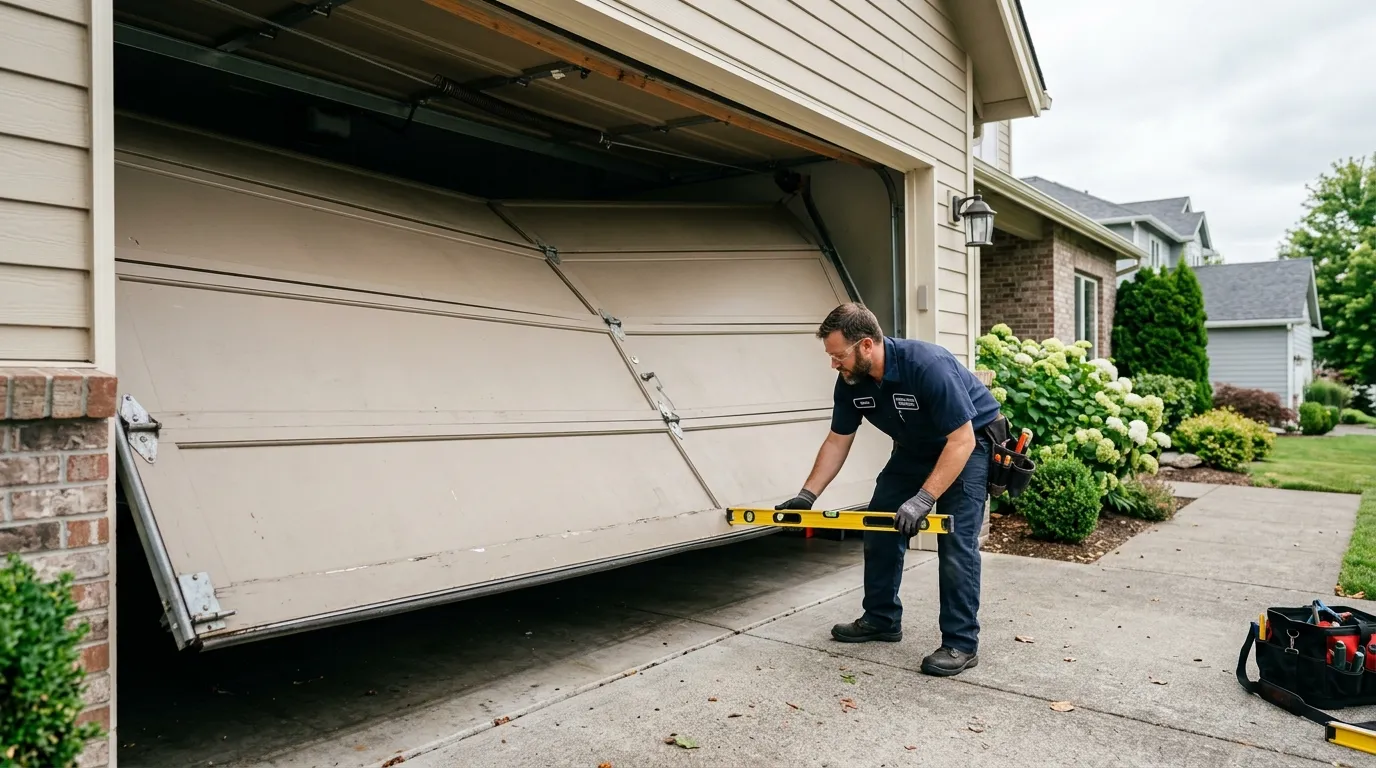
Off-track doors are the other common one, usually from a roller that's cracked rather than worn round, which is common on original rollers from this era. If your door slams the last foot of travel or reverses on its own partway down, that's worth a call before it becomes a door that won't move at all.
Why Lincoln Calls Us
Other Ways We Can Help
Talk to a Technician Before You Book
Describe what the door is doing and get a straight answer on what it likely needs.
Jobs Like Yours
Recent work from this service line.
Frequently Asked Questions
Why did my garage door spring snap in the cold?
Steel springs get more brittle as temperatures drop, and a spring that's been cycling since your house was built in the 1960s or 70s has less flexibility left to begin with. The combination of age and a hard freeze is the most common reason we get called out in winter.
Is it normal for an opener this old to still work?
Some do, especially if it's been maintained, but an opener installed when a lot of Lincoln's housing went up in the 1970s is well past what most manufacturers consider a normal service life. When it fails, replacement parts for that specific model are often hard to find.
Do you repair doors in older Lincoln neighborhoods like Irvingdale or Belmont?
Yes. Those areas share the same 1960s-70s housing stock and hardware issues we see across most of the service area, so we're used to working on original torsion setups, older track brackets, and opener models that are no longer in production.
Need Garage Door Repair for Lincoln's 1960s-70s Housing Stock?
Call now for straight answers on cost and timing.