
Lincoln Garage Door Guide
What a Lincoln Garage Door Service Call Actually Covers
In Lincoln, NE, most houses date to 1967-1995. A service call here means checking springs, tracks, and openers worn down by cold winters and hot summers.
What to Look At First
Most of the housing stock across Lincoln's older sections - think Irvingdale, University Place, Belmont, Meadowlane, West Lincoln, and Highlands - went up between 1967 and 1995, with the median build year sitting around 1975. That matters because a door installed in that window is running original torsion hardware, steel panels from an earlier generation of manufacturing, and often the original opener chain drive.
On a first look we're checking the spring first, always. A torsion spring on a door that old has usually gone through fifteen to thirty thousand open-close cycles, which is close to or past the rated life on standard-wind springs from that era.
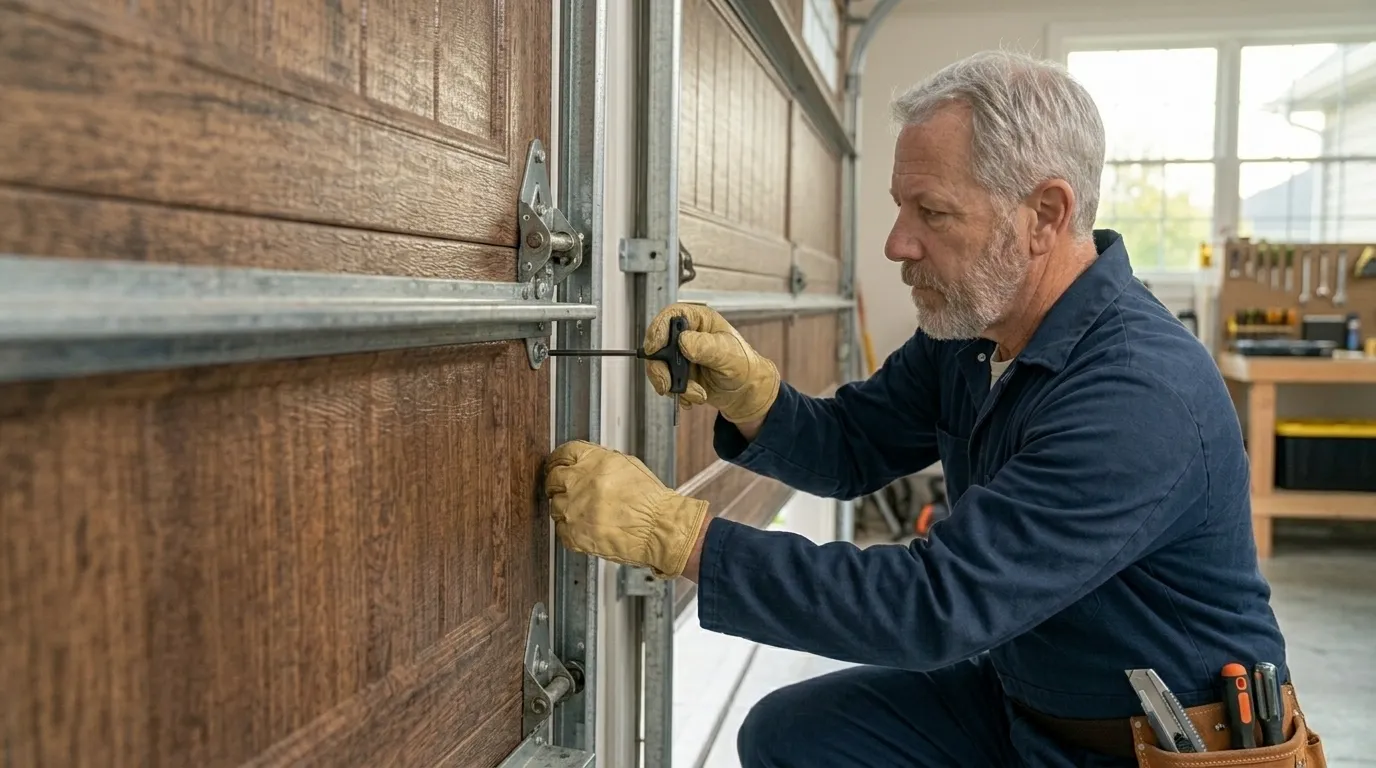
Next is the track - is it still plumb, or has forty-plus years of settling pulled the bracket off the jamb by a quarter inch. Then rollers: steel rollers from the 1970s and 80s are loud and slow, and by now most have flat spots.
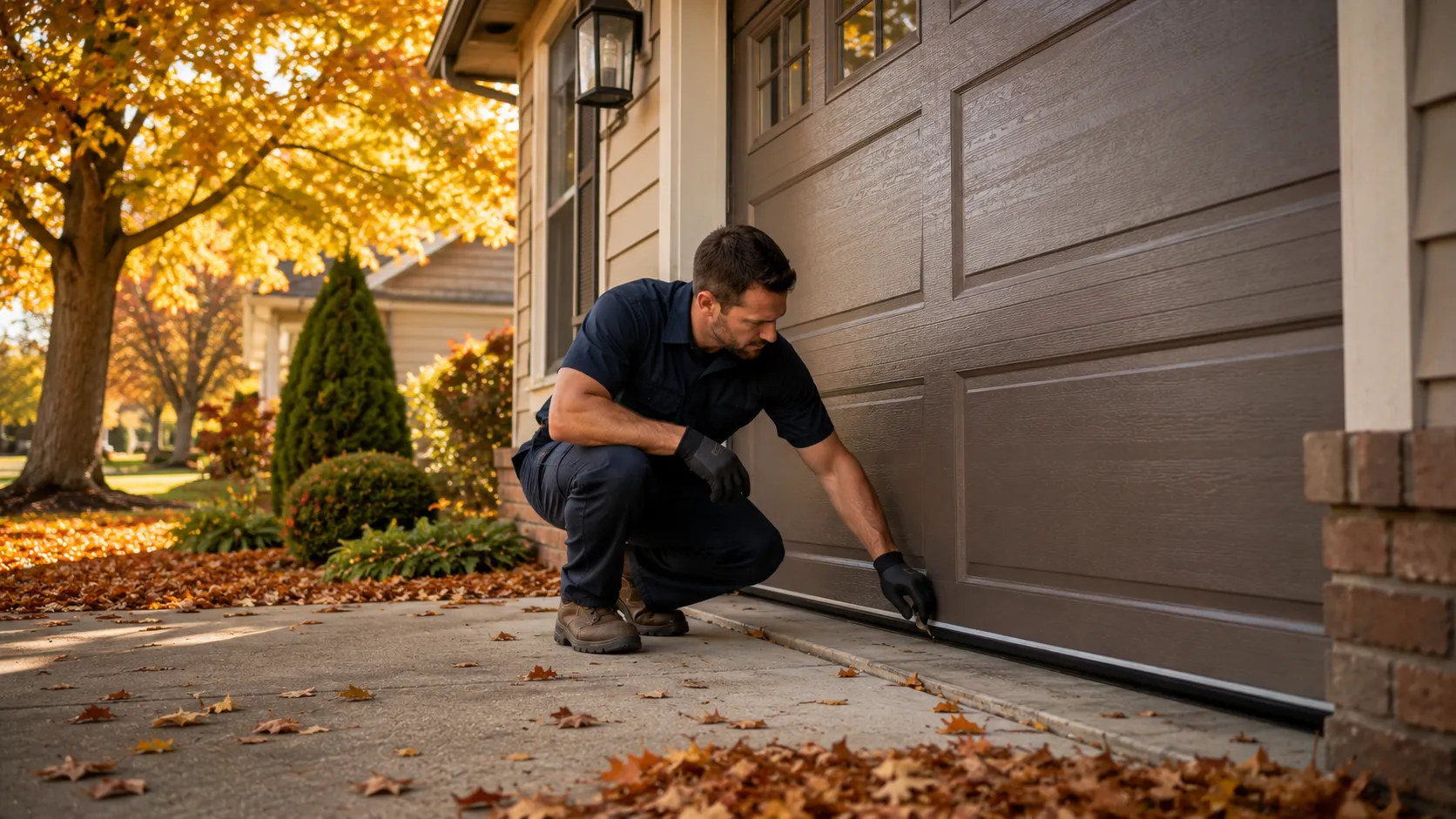
We also look at the panel seams themselves. Doors built before the mid-90s don't have the same weatherstripping channel that later doors use, so gaps at the bottom corner are common and not always fixable without a new bottom panel.
What the Weather Here Does to It
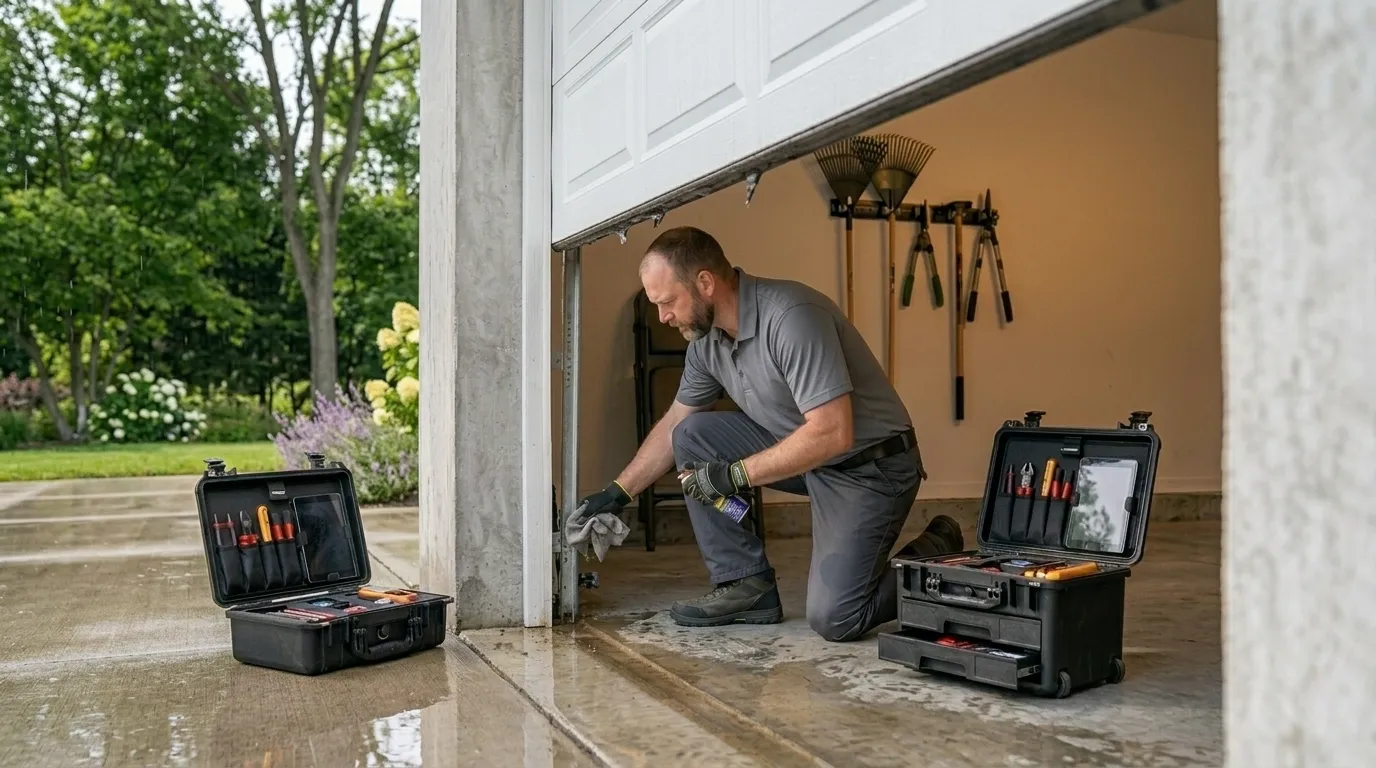
Lincoln sits in a climate band the federal data classifies as severe cold, and that shapes almost every call we run. Steel contracts in the cold months, which tightens tolerances on tracks that were already installed a little loose forty years ago - that's why doors that run fine in July start binding or grinding in January. Lubricant on old rollers and hinges thickens in low temperatures, which is a big part of why a door feels sluggish or won't fully close on a cold morning.
The opposite happens in summer. Heat expands the steel back out, and on a door with worn hardware that expansion shows up as new slack in the chain or new play in the hinges that wasn't there in February. A door doesn't fail because of one extreme - it fails because it's been swinging through that full range every year since it was installed, and hardware from the 60s and 70s wasn't built with today's coatings or seals.
Condensation is the other piece. Uninsulated steel doors on older homes sweat when the garage is warmer than the outside air, and over decades that moisture finds its way into spring coils and hinge pins that were never galvanized to modern standard.
Season by Season
Winter is when the severe-cold pattern shows up as broken springs - cold steel is more brittle, and a spring that's already near the end of its cycle count is more likely to snap on a January morning than in June. It's also when we see the most opener strain, because a stiff, cold door pulls harder on the drive gear.
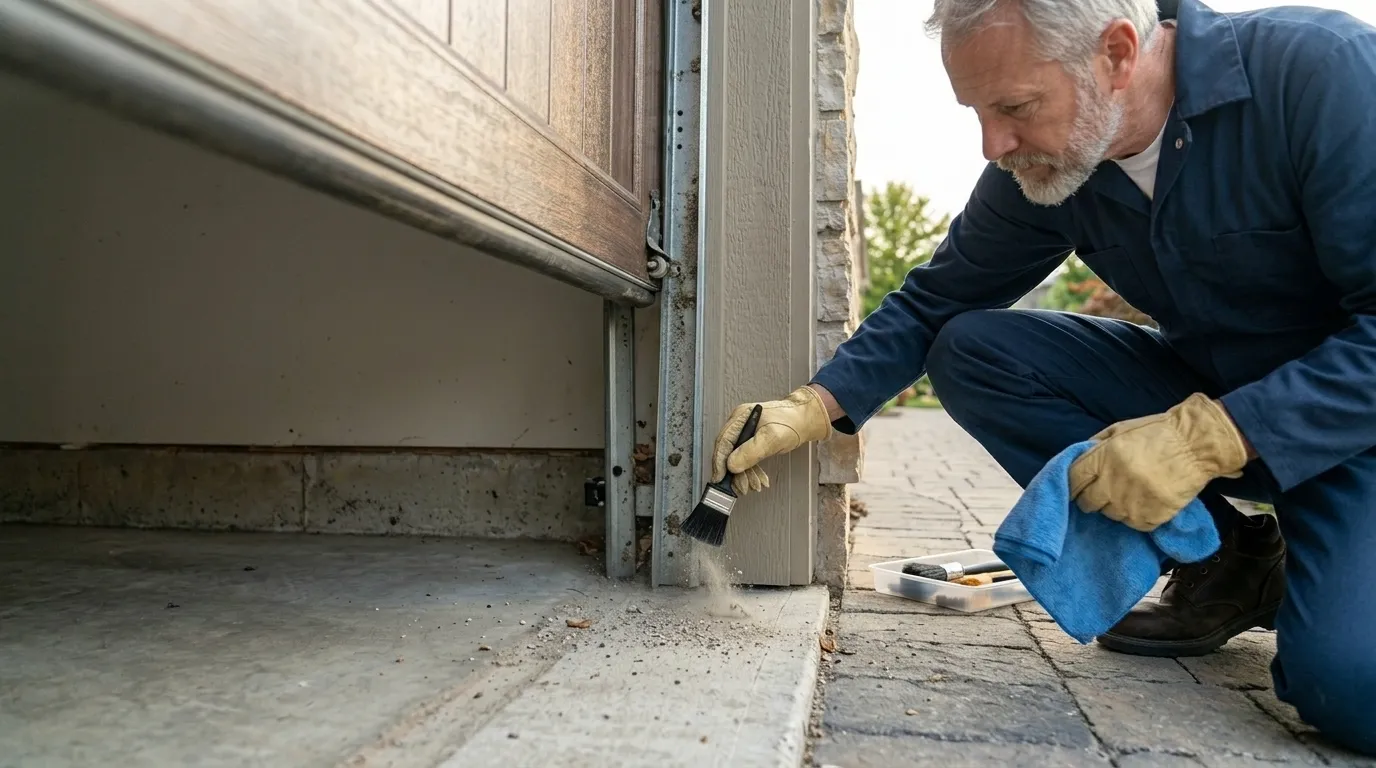
Spring brings the thaw-related calls: water and grit worked into the track over winter, rollers that seized up from rust, and openers that need the force settings reset after months of the door running heavier than normal.
Summer is roller and hinge season. Heat-expanded steel plus decades-old hardware means more noise, more visible play at the panel seams, and more calls about a door that's suddenly loud after being quiet all spring.
Fall is the one window to get ahead of it - lubricating hardware, checking spring balance, and tightening track brackets before the cold sets back in. On a house from the 1967-1995 era, this is the one preventive visit that actually changes what a January service call looks like.
What Is Going On
A service call starts with the same three checks regardless of what the customer thinks is wrong: spring tension, track alignment, and opener force settings. Most of what feels like "the opener is broken" is actually a spring that's lost tension and is making the motor do work it was never built to do.
Across the service area - 5,990 households, 3,770 of them owner-occupied houses - the median household income is $82,854, and most of the calls we get are from people who've owned the house long enough to have watched the door slowly get worse rather than fail all at once. That's a different job than a brand-new install, and it changes what we recommend.
Here's the honest limit: on doors from the 1967-1995 era, some hardware is no longer made, and a repair can mean matching parts that don't quite match, or replacing more than the customer wanted to replace. When a spring, track, and roller set are all near end of life at once, patching one piece just moves the next failure a few months down the road - at that point we'll say so instead of running up a bill on a door that needs a full hardware replacement.
We run this same process whether the house is a few miles from downtown or out toward Waverly, Malcolm, or Eagle - the diagnosis doesn't change, just the drive.
How We Can Help
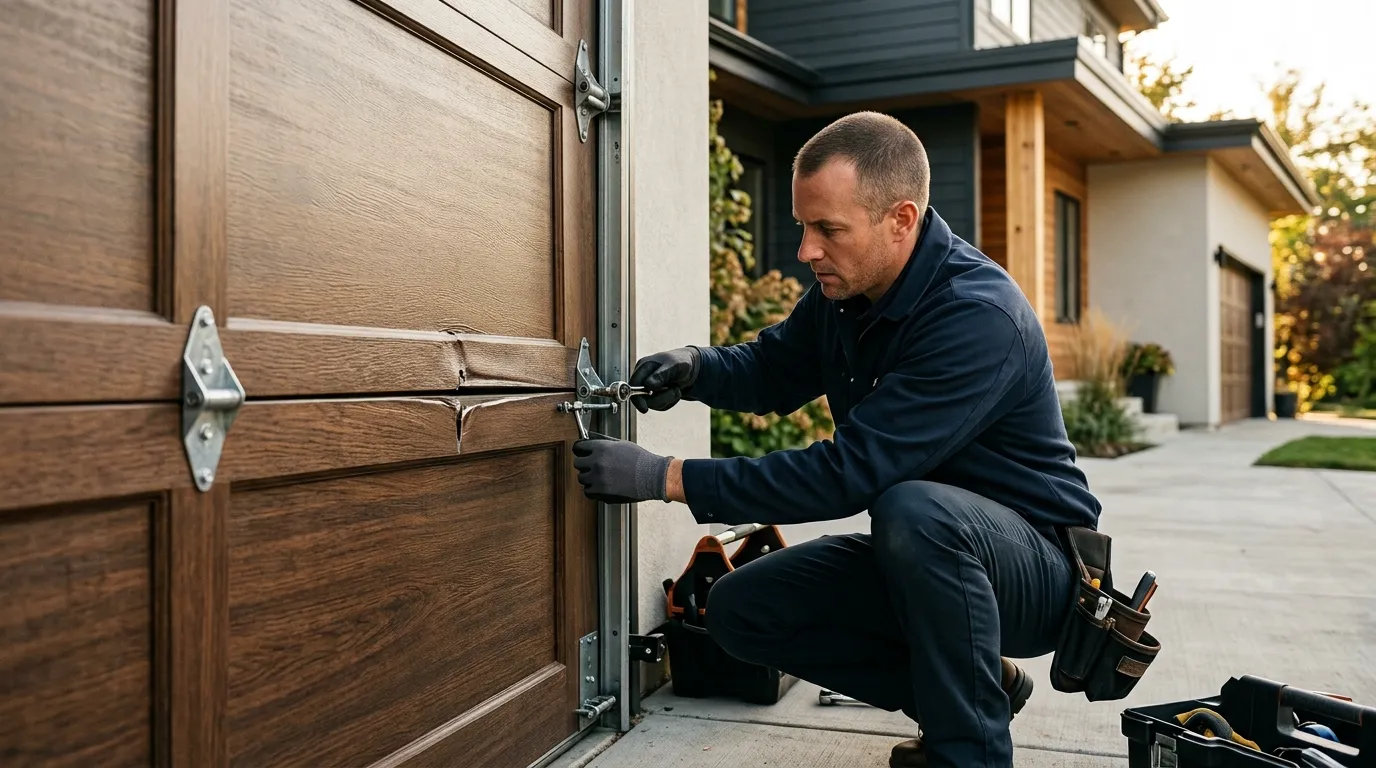
Garage Door Repair
Springs, cables, tracks, rollers, and openers fixed by a tech who explains the problem before touching anything.
Learn more →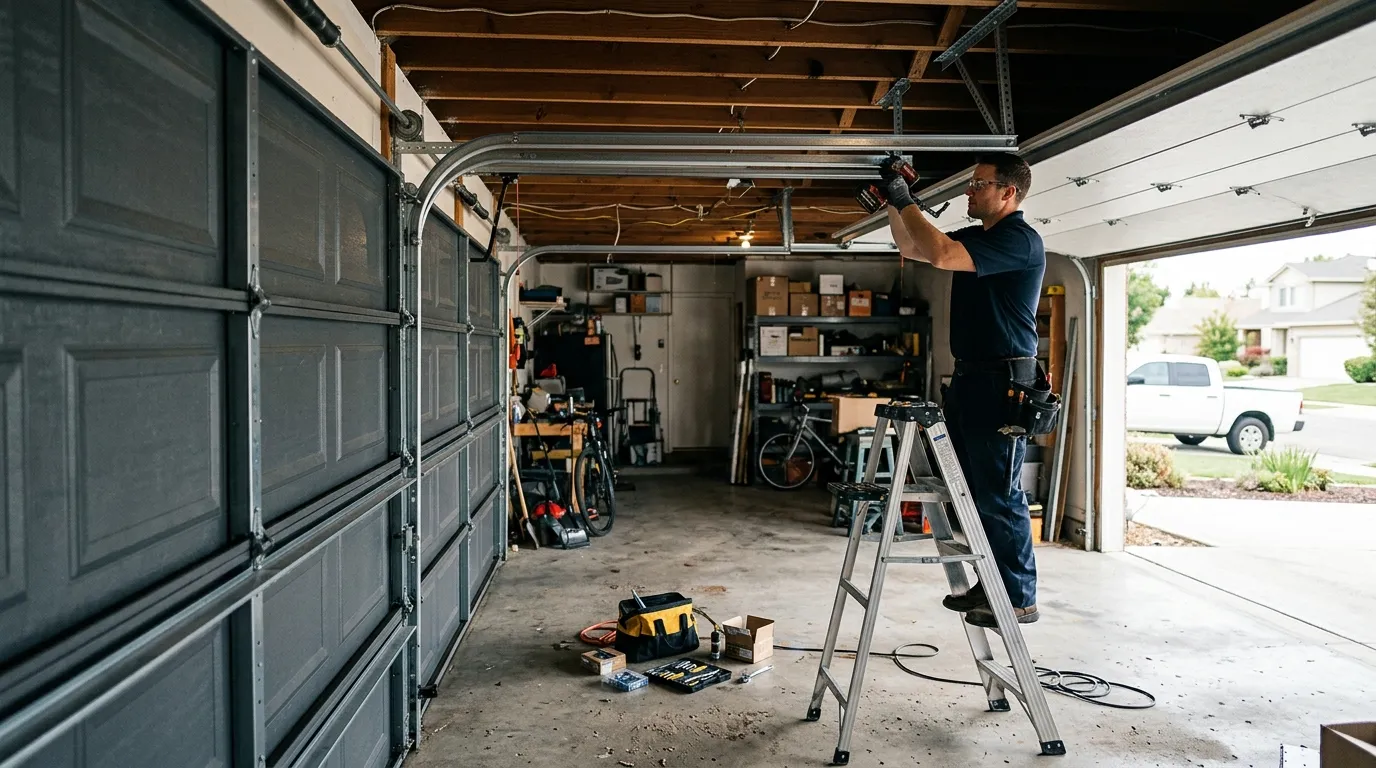
Garage Door Installation
New sectional doors sized and installed for the housing stock actually built in this area.
Learn more →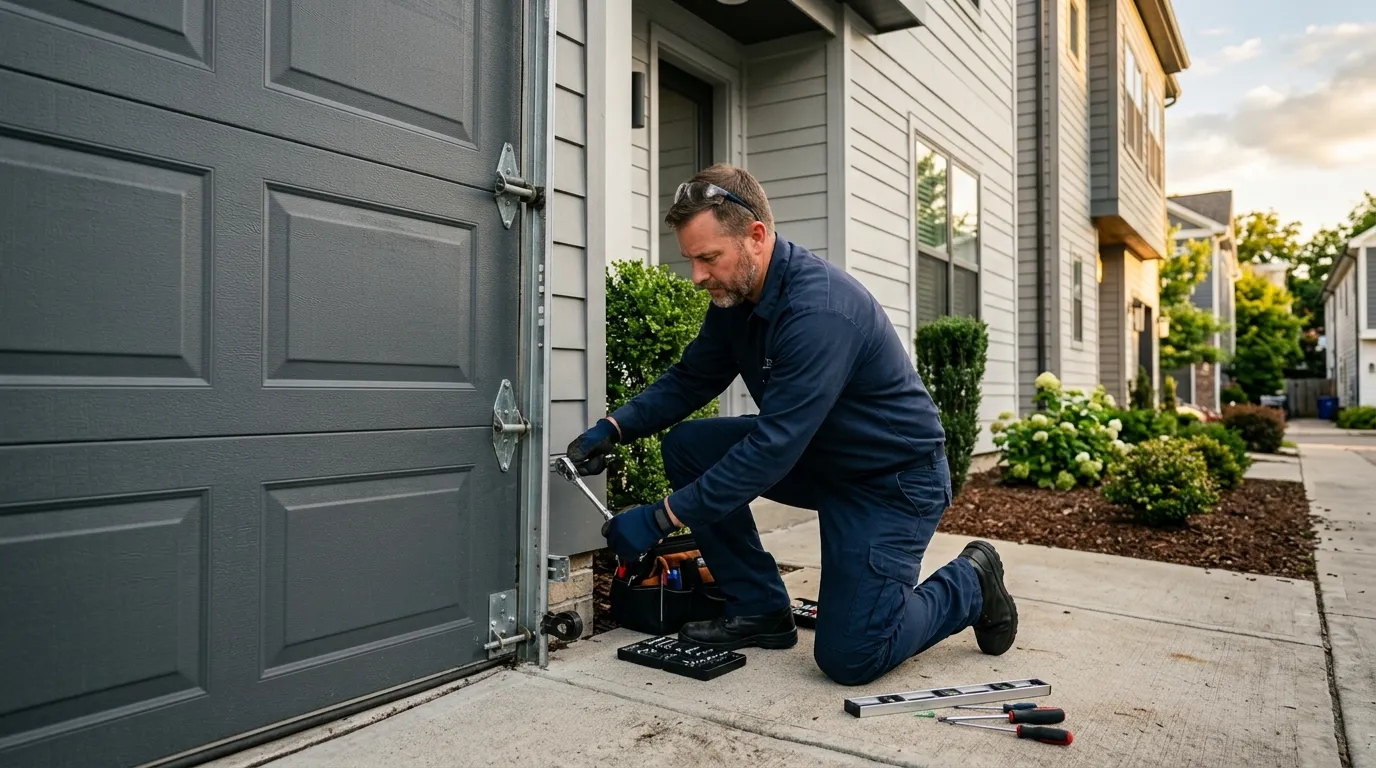
Garage Door Service
Tune-ups, lubrication, and safety checks that catch a small problem before it becomes a service call.
Learn more →Frequently Asked Questions
Why does my garage door get stiff every winter in Lincoln?
Cold contracts the steel track and thickens old lubricant on the rollers and hinges, which is common on Lincoln houses built before 1995 with original hardware. Add a severe-cold winter on top of hardware that's already thirty-plus years old, and the door tightens up until it's binding or refusing to close all the way.
Is a broken spring more likely in winter here?
Yes. Cold steel is more brittle, and a torsion spring that's near the end of its cycle life is more likely to give out on a cold morning than in the middle of summer. This shows up often on original hardware from Lincoln's 1960s-70s and 1970s-90s housing stock.
Do you service houses outside Lincoln proper?
Yes, including Waverly, Malcolm, Eagle, Ceresco, Crete, and Milford, along with the closer-in sections like Irvingdale, University Place, and Belmont. The diagnosis is the same everywhere in the area - same building era, same climate.
Can you match parts on an older door?
Sometimes, but not always. Hardware from the 1967-1995 window isn't all still manufactured, and a repair can mean a partial mismatch or a recommendation to replace more than one part at once. We'll tell you honestly when patching one piece just delays the next failure.
Have a Door That Needs a Second Opinion?
Call and describe what it is doing - we will tell you what it likely is.