Lincoln Garage Door Guide
When the Power Goes Out and the Opener Won't Move
How Lincoln's 1967-1995 housing stock and cold winters affect garage door openers during power cuts, plus what to check before the next outage.
What to Look At First
Most houses across Lincoln's older neighborhoods went up between 1967 and 1995, with the median build year sitting around 1975. That means a lot of openers in this town are original-era chain drives or first-generation screw drives, installed before battery backup was standard equipment. If your opener has never been swapped, there's a good chance it has no backup battery at all, which means a power cut leaves the door wherever it stopped.
Start by finding the manual release cord - the red handle hanging from the trolley. Pull it down and back toward the door to disconnect the carriage from the opener rail.
On the older chain-drive units common in this housing stock, that cord can get brittle or the release lever can seize from age and cold. Test it now, not during an outage, because a stuck release with a door you can't lift by hand is a bad time to discover the problem.
Check the wall control too. A lot of these houses still run the original wired button from the 1970s or 80s, with no keypad backup. If that's your only way in and the opener has no battery, a power cut means you're using the release cord and lifting by hand every time.
What the Weather Here Does to It
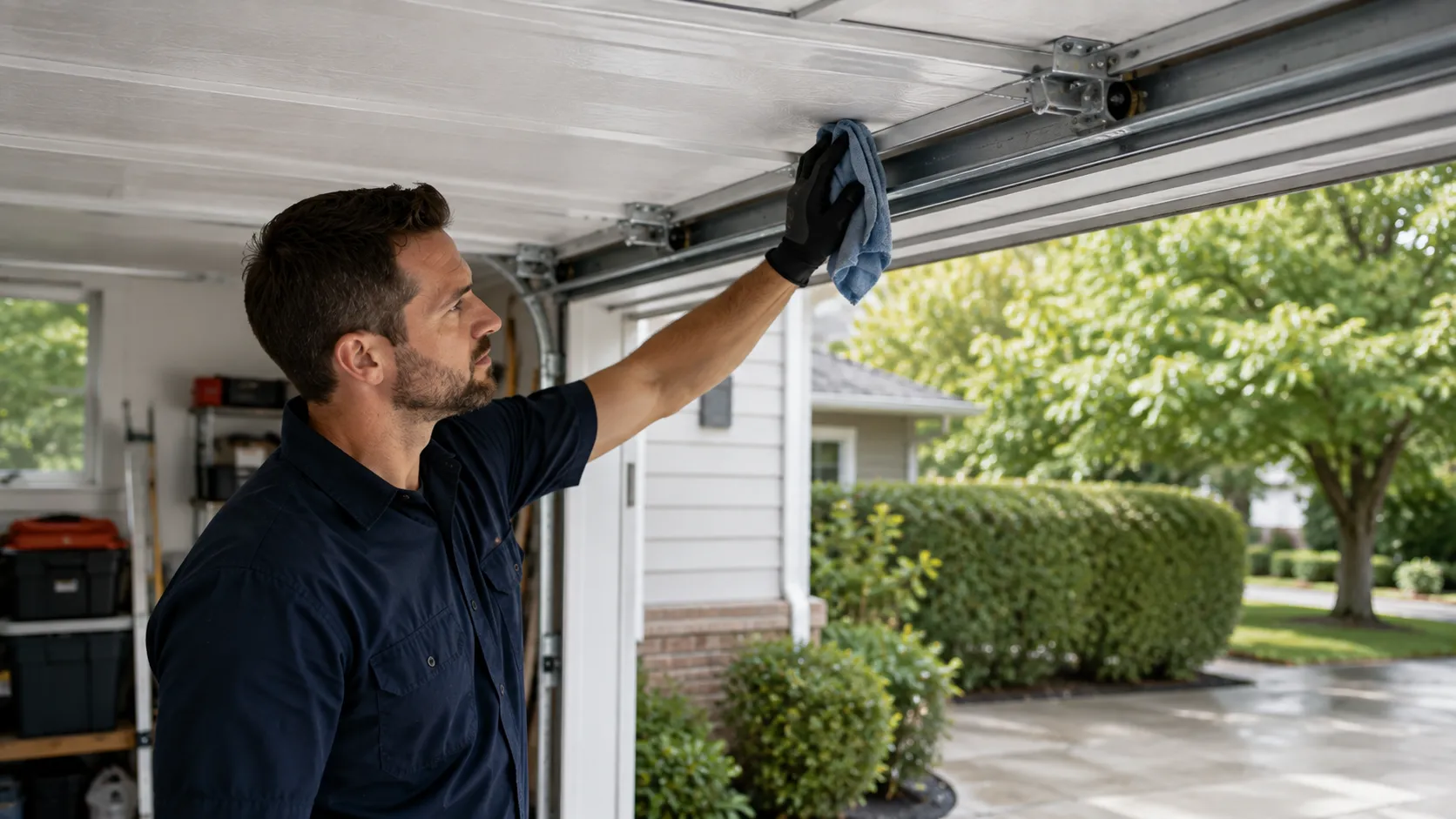
Lincoln sits in a severe cold climate band, and that matters more for openers than people expect. Cold doesn't just stiffen springs - it slows the gearing inside an opener motor and thickens old grease on the trolley rail, so the unit draws more current to do the same job. An opener that's been limping along for years can trip a breaker or blow a capacitor on a hard winter morning that it would have survived in July.
Power cuts in this town tend to cluster with the same weather that stresses the opener mechanically - ice loading on lines, wind-driven outages during a cold snap. That's the worst possible timing: the door is hardest to move by hand exactly when the power is most likely to be out. A battery backup unit rated for cold-weather use covers both problems at once, but if your opener predates that option, you're relying on the manual release in conditions where a stiff, cold-soaked door is already heavier to lift than it should be.
One honest limitation: a battery backup won't fix a door that's already fighting worn rollers or an underpowered spring. If the door binds on the track even with power on, adding backup power just means it binds on battery power too.
Season by Season
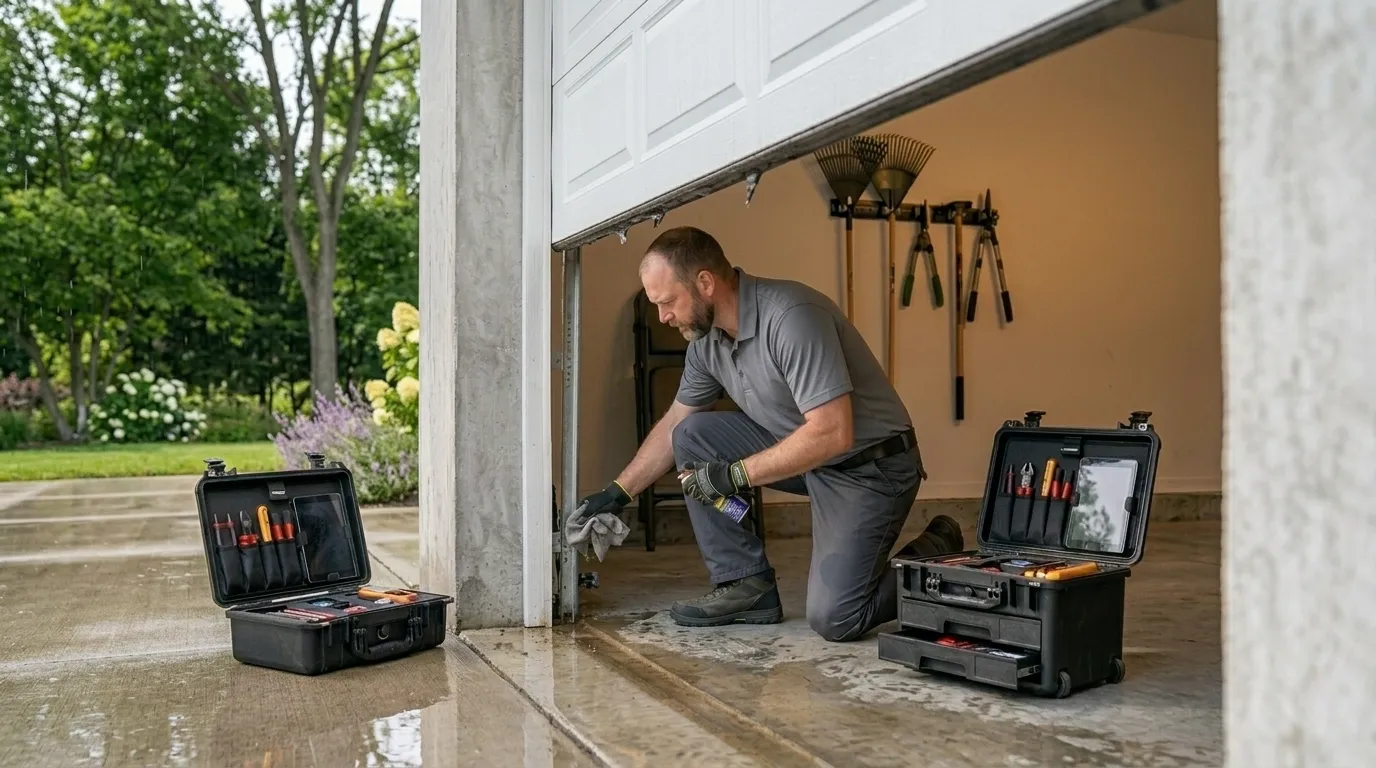
Fall is the right time to check backup battery charge and test the manual release before the first real cold sets in, since batteries lose capacity faster once temperatures drop and a weak one may not carry a cycle during a January outage.
Winter is when this town's outages and opener failures overlap. Ice storms take down lines, and the same cold that strains the grid also thickens lubricant in older opener gearboxes across Lincoln's 1960s-70s housing stock. If you lose power and the opener has no battery, plan on the manual release and a hand lift until service is restored.
Spring brings the freeze-thaw cycle that can loosen the sensor brackets near the floor - not an opener failure exactly, but it shows up as an opener that won't close, which some owners mistake for a power problem.
Summer is lower risk for outages tied to cold, but storms still knock out power, and it's a good stretch to actually replace an aging opener before the run of cold months comes back around.
What Is Going On
Across the six named areas that make up most of Lincoln's older housing, the pattern is consistent: original or early-replacement openers, wired controls without backup, and a climate that pushes hard on both twice a year. With roughly 3,770 owner-occupied houses in the service area and a median household income of $82,854, most owners here can afford a battery-backup unit when the time comes, but a lot of them are running units old enough that the upgrade hasn't happened yet.
The honest math: if your opener is original to a house built in the 1970s, you're not looking at a repair, you're looking at a replacement, because parts for that era of chain-drive unit are mostly gone. A battery backup unit isn't just convenience here - given how often winter power cuts land on the same days as hard cold, it's the difference between opening the door normally and hauling it up by hand in freezing air.
How We Can Help
Garage Door Repair
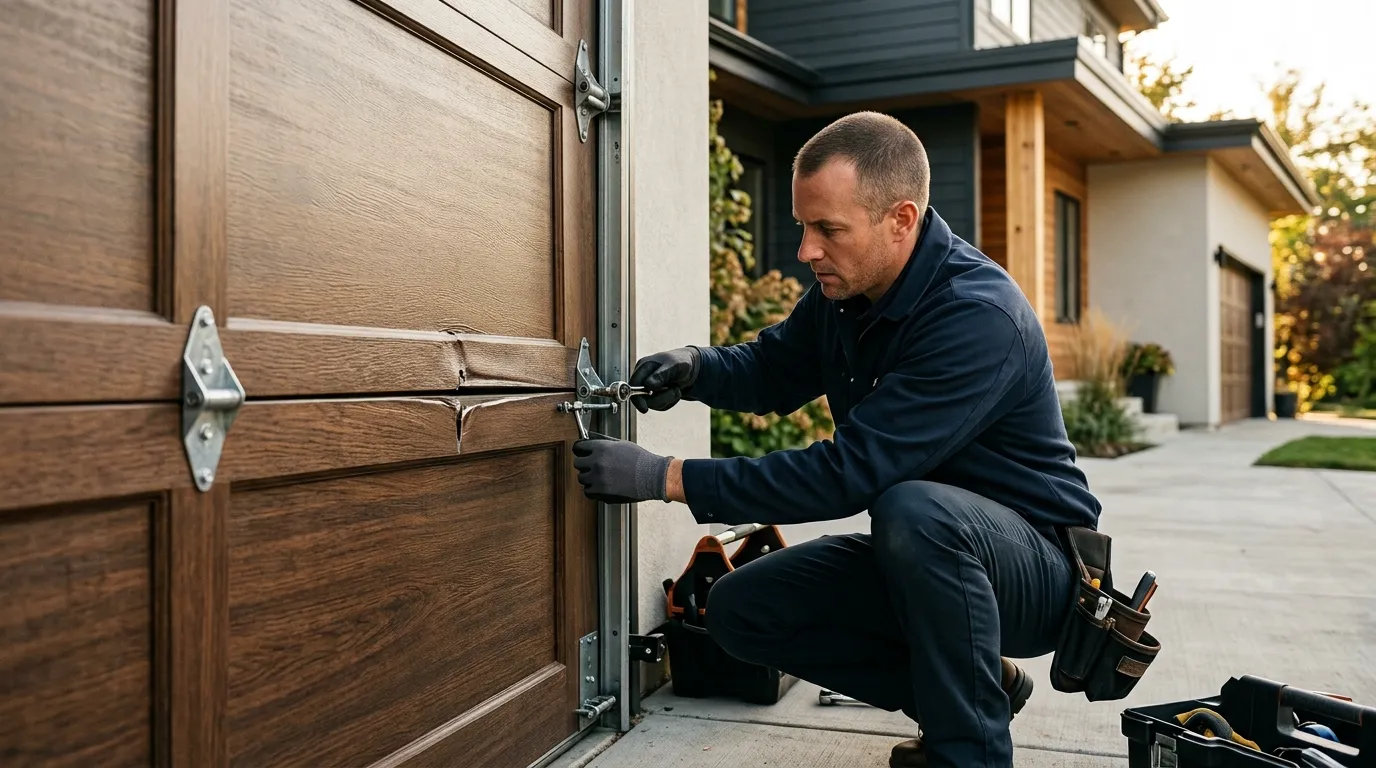
Springs, cables, tracks, rollers, and openers fixed by a tech who explains the problem before touching anything.
Learn more →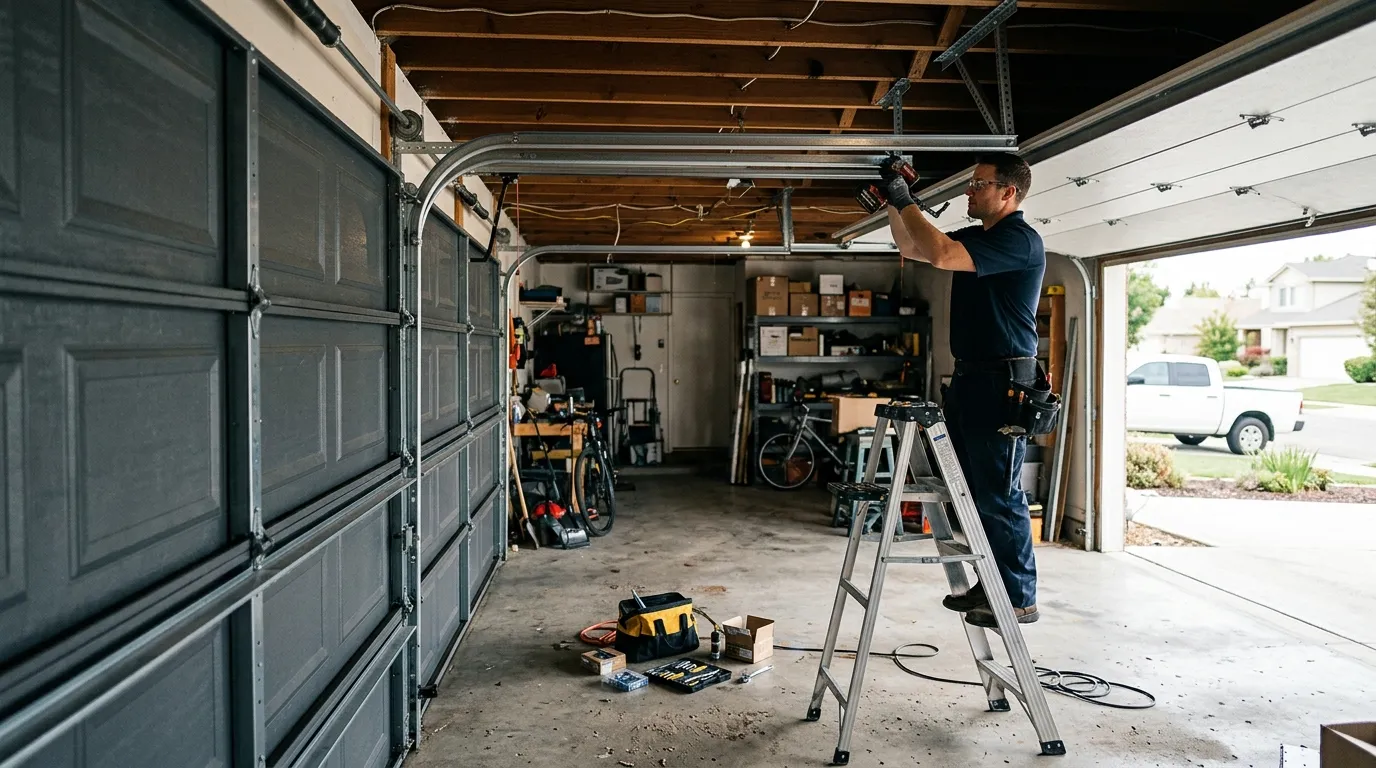
Garage Door Installation
New sectional doors sized and installed for the housing stock actually built in this area.
Learn more →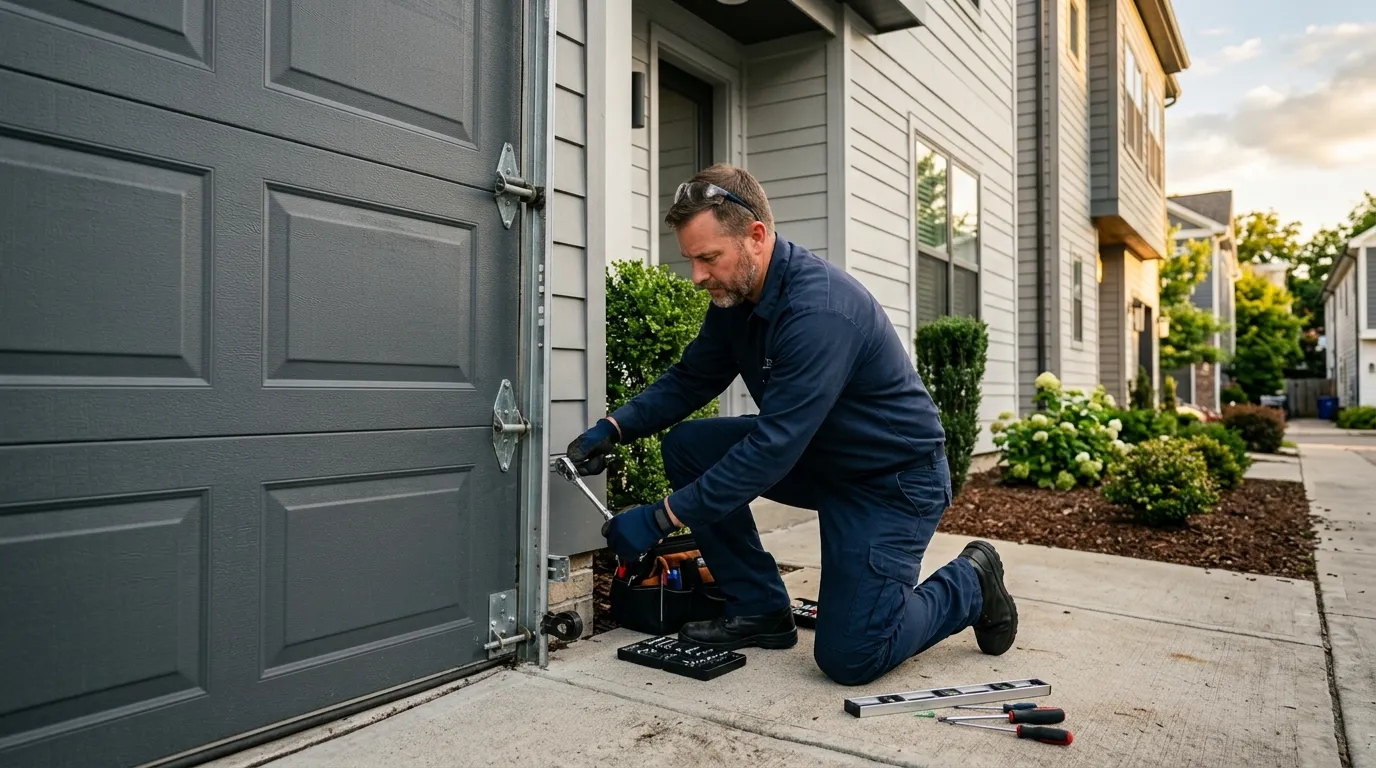
Garage Door Service
Tune-ups, lubrication, and safety checks that catch a small problem before it becomes a service call.
Learn more →Frequently Asked Questions
Does my garage door opener need a battery backup in Lincoln?
If your opener predates battery backup as standard equipment, which is common in houses built here in the 1960s-90s, then yes - Lincoln's cold winters bring power cuts on the same days that make manual lifting hardest. A backup battery keeps the opener running through a short outage.
Why does my opener struggle more in winter?
Cold slows the internal gearing and thickens old lubricant on the trolley rail, so the motor works harder for the same lift. In a severe cold climate like Lincoln's, an aging opener that runs fine in summer can trip a breaker or fail outright on a hard winter morning.
Can I just keep using the manual release during outages?
You can, but it's worth testing the release cord and lever before winter, not during an outage. On older chain-drive openers common in this town's housing stock, the release can seize from age and cold, leaving you unable to lift the door by hand either.
Is it worth repairing an old opener instead of replacing it?
For openers original to houses built in the 1970s, usually not - parts for that generation are largely unavailable. If yours has no battery backup and is that old, replacement with a cold-rated unit is the more practical option.
Have a Door That Needs a Second Opinion?
Call and describe what it is doing - we will tell you what it likely is.